
Principles of Extraction
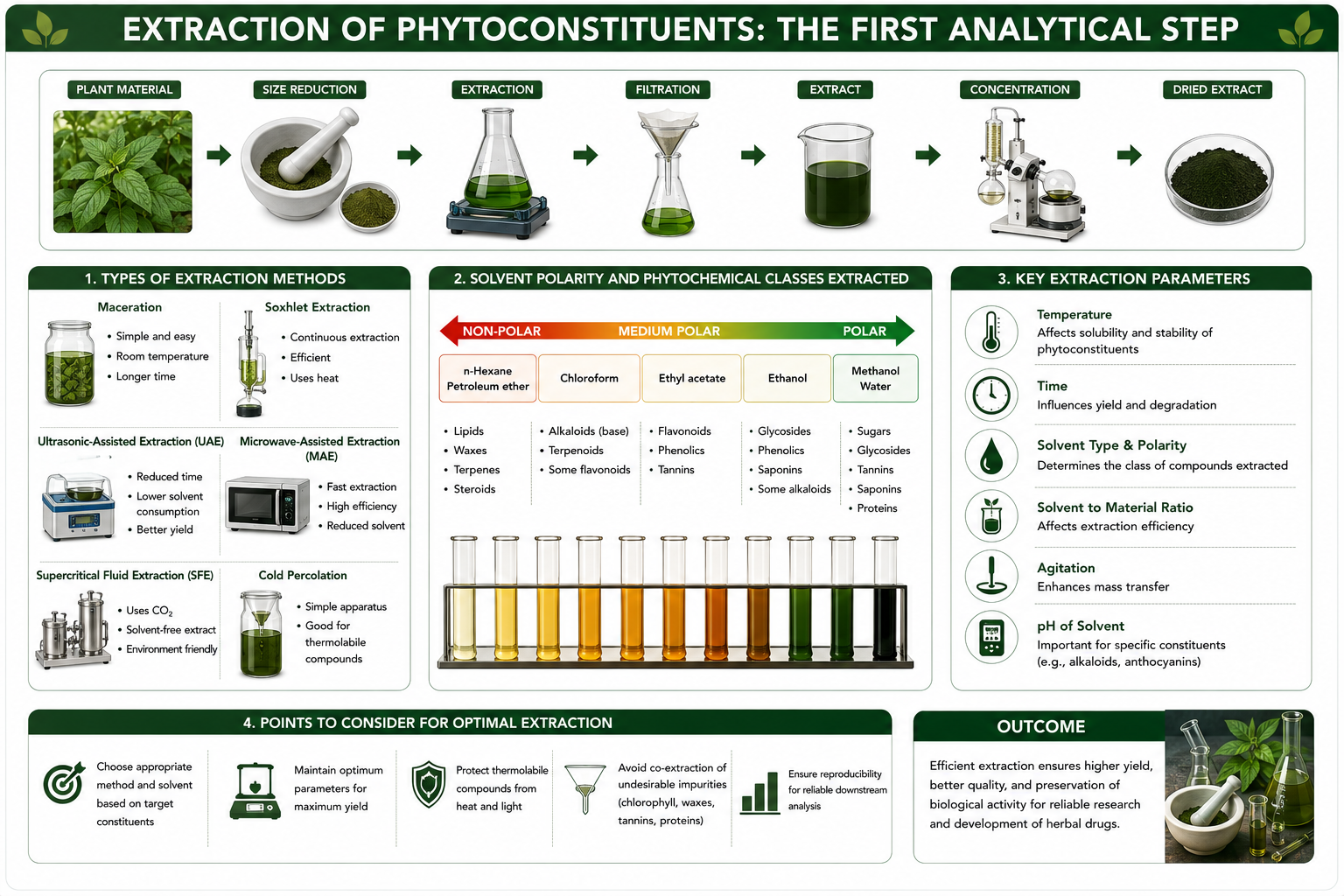
Extraction is the process by which bioactive phytoconstituents are separated from the structural plant matrix into a liquid solvent, and represents the critical first analytical step of herbal drug research, since the choice of extraction method, solvent system, temperature, and duration directly determines which phytochemical classes are recovered, in what concentration, and with what degree of biological activity retained. The underlying scientific principle is one of selective solubility: a solvent will preferentially dissolve compounds whose polarity is similar to its own, meaning that the same plant material extracted with solvents of differing polarity will yield qualitatively and quantitatively distinct phytochemical profiles. A poorly designed extraction protocol can result in low overall yield, degradation or loss of thermolabile compounds, or co-extraction of undesirable interfering substances such as chlorophyll, waxes, or tannin-protein complexes, any of which can compromise every downstream phytochemical and pharmacological finding.