
Troubleshooting, Regulatory Affairs, and Career Guidance
The final chapter of this text addresses three practical dimensions of pharmaceutics that complement the scientific foundation established in the preceding chapters: the systematic root-cause analysis of common manufacturing and formulation problems, the structure and content of the regulatory documentation required for product approval, and the career pathways available to graduates trained in this discipline. Formulation troubleshooting is treated here not as a checklist to be memorised, but as an application of the underlying pharmaceutical science already established, allowing a practitioner to reason from first principles when confronted with an unfamiliar manufacturing deviation.
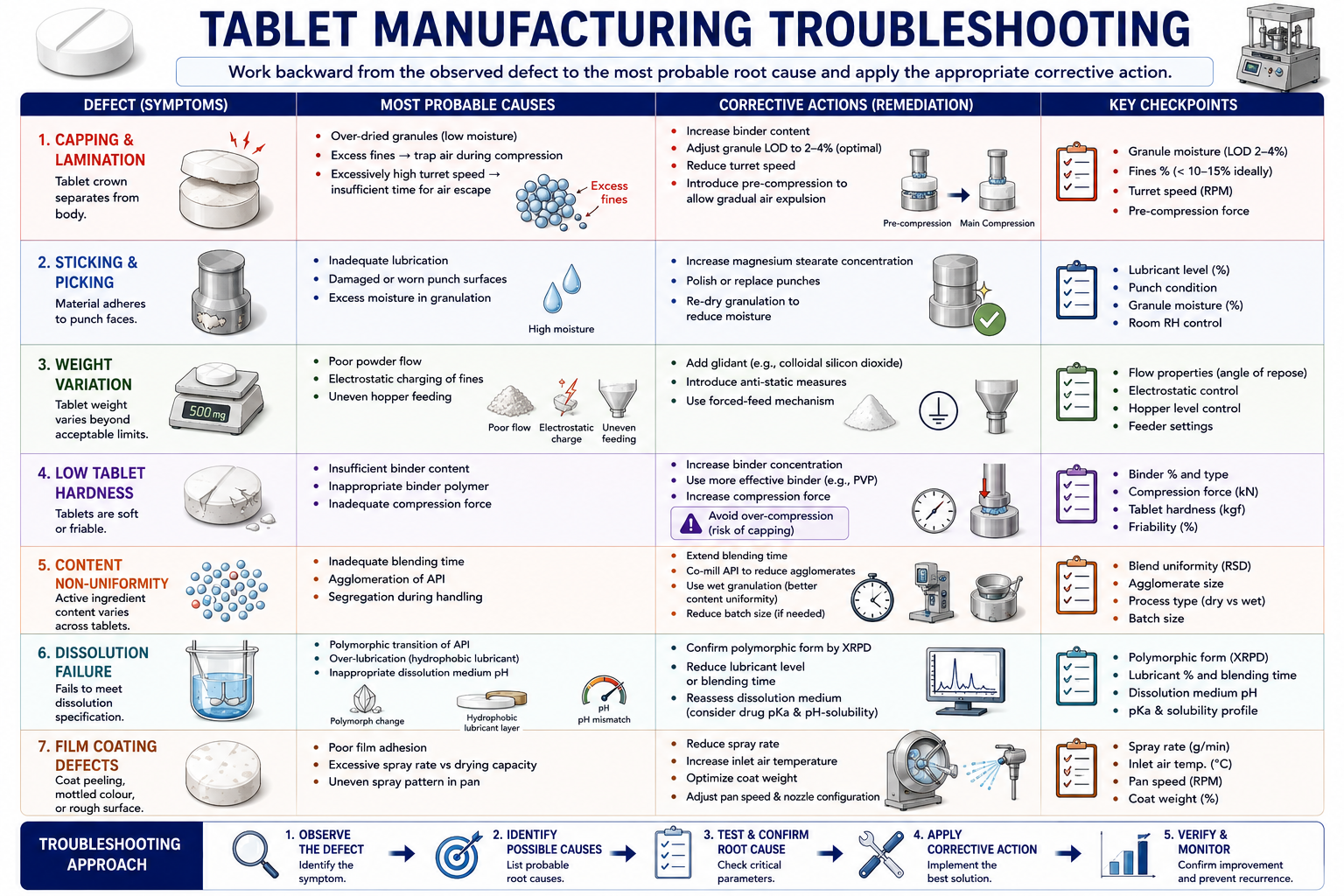
Tablet manufacturing problems, though outwardly diverse, generally trace back to a relatively small set of underlying physical or formulation causes, and effective troubleshooting requires systematically working backward from an observed defect to its most probable root cause.
Capping and lamination, in which the tablet crown separates partially or completely from the body of the tablet, most commonly arise from over-dried granules with insufficient residual moisture to support inter-particulate bonding, an excessive proportion of fine particles that trap air during compression, or excessively high turret speed that does not allow adequate time for air to escape from the compact; remediation typically involves increasing binder content, adjusting the granule loss-on-drying to within an optimal two to four per cent range, reducing turret speed, or introducing a pre-compression stage to allow gradual air expulsion before the main compression event.
Sticking and picking, in which material adheres to the punch faces, most frequently results from inadequate lubrication, damaged or worn punch surfaces, or excessive moisture content within the granulation, and is generally addressed by increasing magnesium stearate concentration, polishing or replacing the affected punches, or re-drying the granulation to reduce ambient moisture uptake.
Weight variation beyond acceptable limits typically reflects poor powder flow, electrostatic charging of fine particles, or uneven hopper feeding, and is remediated through the addition of a glidant such as colloidal silicon dioxide, the introduction of anti-static measures, or the installation of a forced-feed mechanism to ensure consistent die filling.
Low tablet hardness generally indicates insufficient binder content, selection of an inappropriate binder polymer, or inadequate compression force, and is addressed through an increase in binder concentration, reformulation with a more effective binder such as polyvinylpyrrolidone, or an increase in applied compression force, with careful attention paid to avoiding the opposite extreme of over-compression, which can itself induce capping.
Content non-uniformity most commonly arises from inadequate blending time, agglomeration of the active ingredient, or segregation of formulation components during handling, and is remediated through extended blend times, co-milling of the active ingredient to reduce agglomerate size, conversion to a wet granulation process that physically binds the drug to the granule matrix, or, in more difficult cases, a reduction in batch size to improve blend homogeneity.
Dissolution failure, representing perhaps the most consequential tablet defect given its direct implication for bioavailability, may result from an unanticipated polymorphic transition of the active ingredient during processing, over-lubrication with a hydrophobic lubricant that impedes water ingress into the tablet matrix, or use of an inappropriate dissolution medium pH relative to the ionisation behaviour of the drug, and troubleshooting accordingly requires X-ray powder diffraction confirmation of polymorphic form stability, a reduction in lubricant blending time or concentration, or reassessment of the dissolution medium against the drug's established pKa and pH-solubility profile.
Film coating defects such as coat peeling or mottled colour distribution typically reflect insufficient film adhesion, excessive spray rate relative to drying capacity, or uneven spray pattern within the coating pan, and are addressed through reduced spray rate, increased inlet air temperature, optimisation of applied coat weight, or adjustment of pan rotation speed and nozzle configuration.
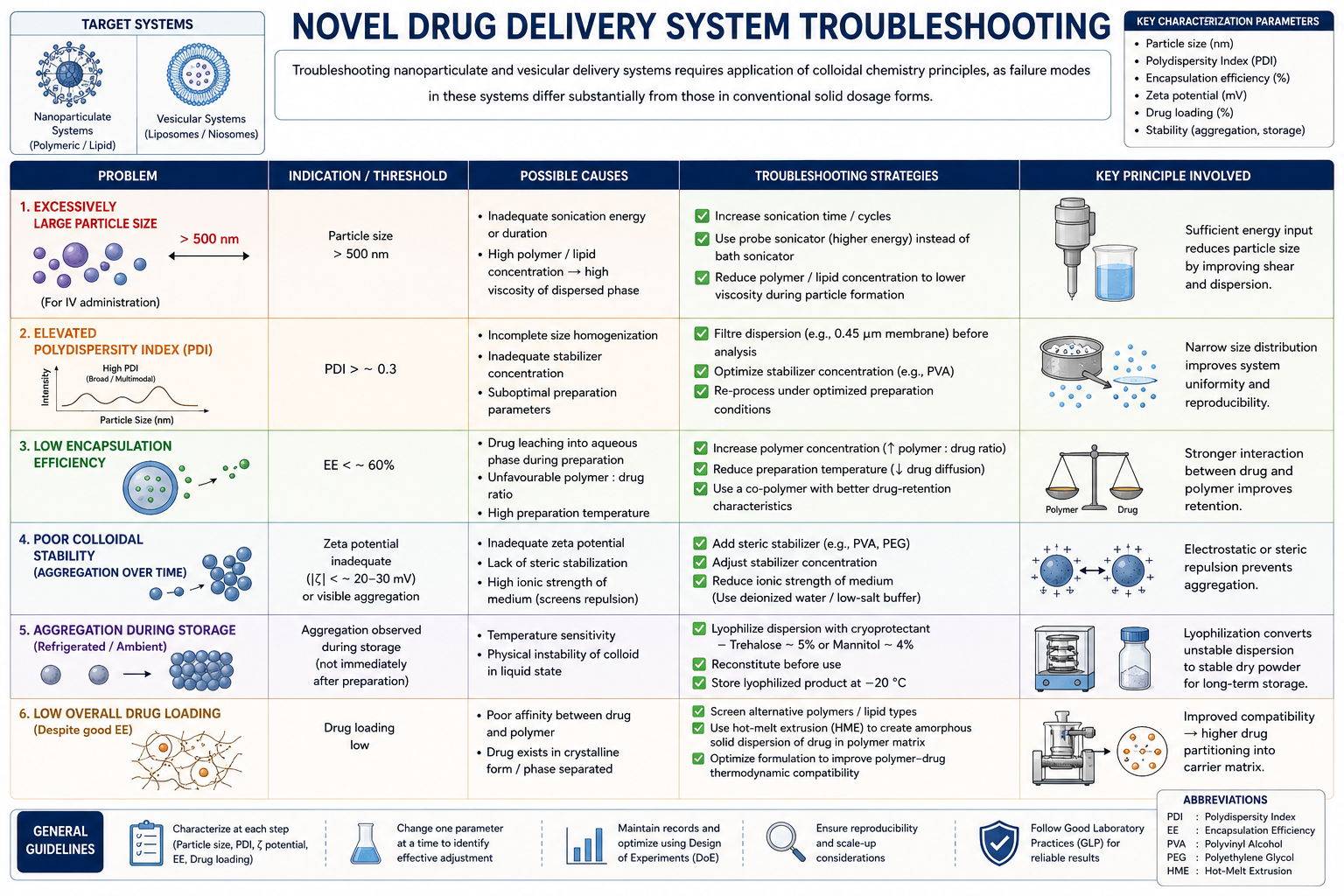
Troubleshooting nanoparticulate and vesicular delivery systems requires application of the colloidal chemistry principles established in the chapter on novel drug delivery systems, since the failure modes characteristic of these systems differ substantially from those encountered in conventional solid dosage forms.
Excessively large particle size, typically defined as exceeding 500 nanometres for systems intended for intravenous administration, most commonly results from inadequate sonication energy or duration during preparation, and is addressed by increasing sonication cycles, transitioning to a probe sonicator offering higher energy input than a bath sonicator, or reducing the polymer or lipid concentration to lower the viscosity of the dispersed phase during particle formation.
An elevated Polydispersity Index, generally regarded as problematic above approximately 0.3, reflects a broad or multimodal particle size distribution and is typically remediated through post-preparation filtration, commonly through a 0.45 micrometre membrane, prior to particle size analysis, optimisation of the stabiliser concentration, most frequently polyvinyl alcohol, or a complete re-processing of the batch under revised preparation parameters.
Low encapsulation efficiency, generally regarded as problematic below approximately 60 per cent, frequently reflects drug leaching into the continuous aqueous phase during preparation or an unfavourable polymer-to-drug ratio, and is addressed by increasing polymer concentration relative to drug, reducing preparation temperature to slow drug diffusion out of the forming particle, or substituting a co-polymer offering more favourable drug-retention characteristics.
Poor colloidal stability, evidenced by particle aggregation over storage time, generally indicates an inadequate zeta potential and is remediated through the addition of a steric stabiliser such as polyvinyl alcohol or polyethylene glycol, or through reduction of the ionic strength of the surrounding medium, which otherwise screens electrostatic repulsion between particles and promotes aggregation.
Aggregation occurring specifically during storage at refrigerated or ambient temperature, distinct from aggregation observed immediately following preparation, often reflects underlying temperature sensitivity of the colloidal system and is best addressed through lyophilisation in the presence of an appropriate cryoprotectant, commonly trehalose at approximately 5 per cent or mannitol at approximately 4 per cent, converting the unstable liquid dispersion into a stable dry powder for reconstitution immediately prior to use, with storage of the lyophilised product at minus 20 degrees Celsius providing a further margin of stability.
Low overall drug loading, distinct from low encapsulation efficiency, generally reflects poor intrinsic affinity between the drug and the chosen carrier polymer and is addressed through systematic screening of alternative polymer types or through hot-melt extrusion processing to generate an amorphous molecular dispersion of drug within the carrier matrix, thereby improving the thermodynamic compatibility between the two components.
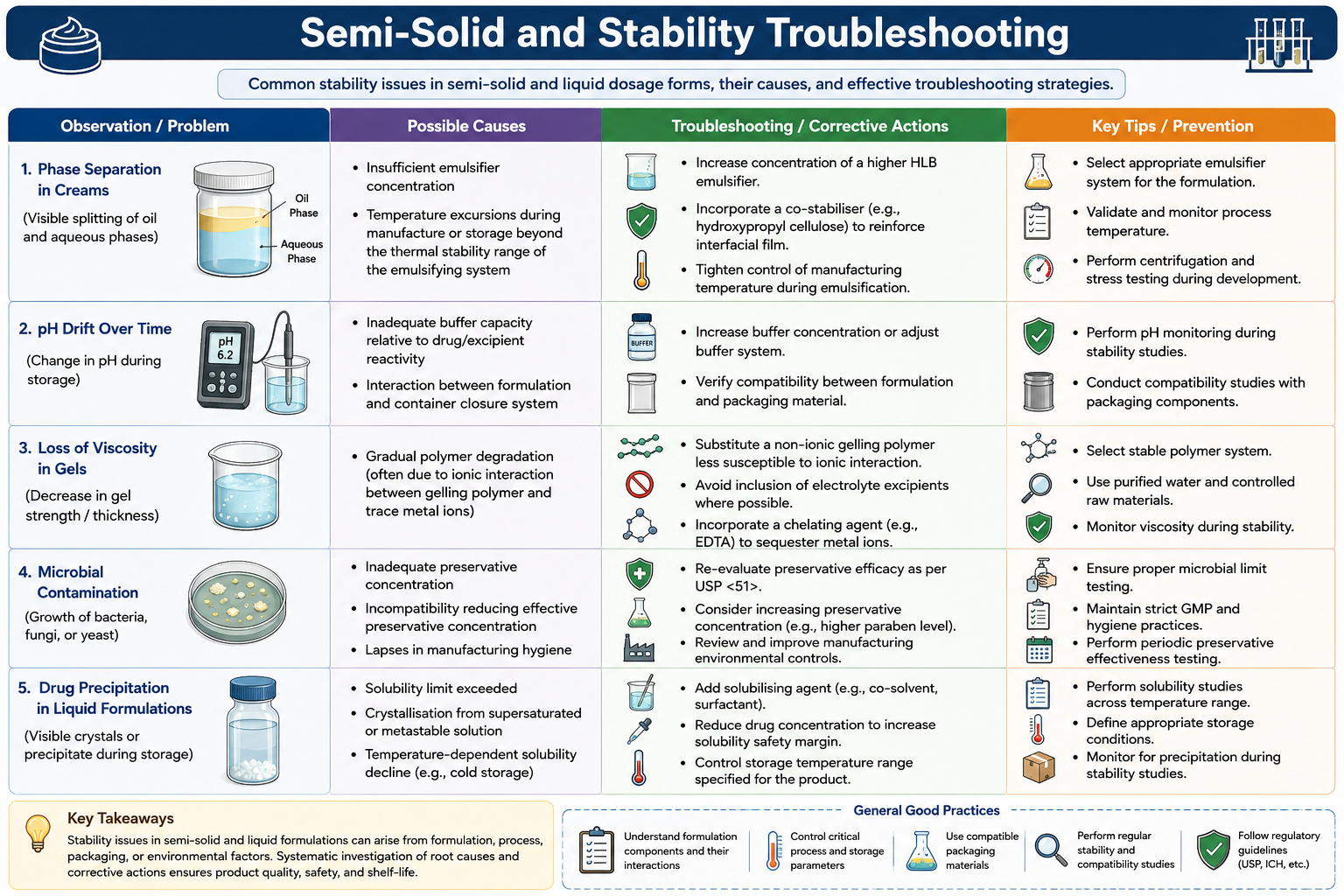
Semi-solid dosage forms present their own characteristic set of manufacturing and stability challenges rooted in their emulsified or gelled physical structure.
Phase separation in creams, observed as visible splitting of the oil and aqueous phases, most commonly results from insufficient emulsifier concentration or from temperature excursions during manufacture or storage that exceed the thermal stability range of the emulsifying system, and is addressed by increasing the concentration of a higher Hydrophile-Lipophile Balance emulsifier, incorporating a co-stabiliser such as hydroxypropyl cellulose to reinforce the interfacial film, or tightening control of manufacturing temperature during the emulsification process.
pH drift observed over the course of storage typically reflects inadequate buffer capacity within the formulation relative to the chemical reactivity of the drug and excipients, or interaction between the formulation and its container closure system, and is remediated by increasing buffer concentration or by verifying compatibility between the formulation and the intended packaging material.
Loss of viscosity in gel formulations over storage time frequently indicates gradual polymer degradation, often catalysed by ionic interaction between the gelling polymer and trace metal ions present in the formulation or introduced from the manufacturing environment, and is addressed by substituting a non-ionic gelling polymer less susceptible to such interaction, avoiding the inclusion of electrolyte excipients where formulation flexibility permits, or incorporating a chelating agent such as ethylenediaminetetraacetic acid to sequester interfering metal ions.
Microbial contamination detected during stability testing generally indicates preservative system failure, whether through inherent inadequacy of the preservative concentration selected, incompatibility between the preservative and other formulation components that reduces its effective free concentration, or lapses in manufacturing hygiene, and troubleshooting accordingly requires re-evaluation of preservative efficacy in accordance with USP <51>, consideration of an increased preservative concentration such as an elevated paraben level, and a thorough review of manufacturing environmental controls.
Drug precipitation observed during storage of a liquid formulation typically indicates that the drug's solubility limit within the vehicle has been exceeded, whether due to a slow crystallisation process from an initially supersaturated or metastable solution, or due to a temperature-dependent solubility decline during cold storage or transport, and is addressed through the addition of a solubilising agent, a reduction in the target drug concentration to provide a greater solubility safety margin, or tighter control of the storage temperature range specified for the product.
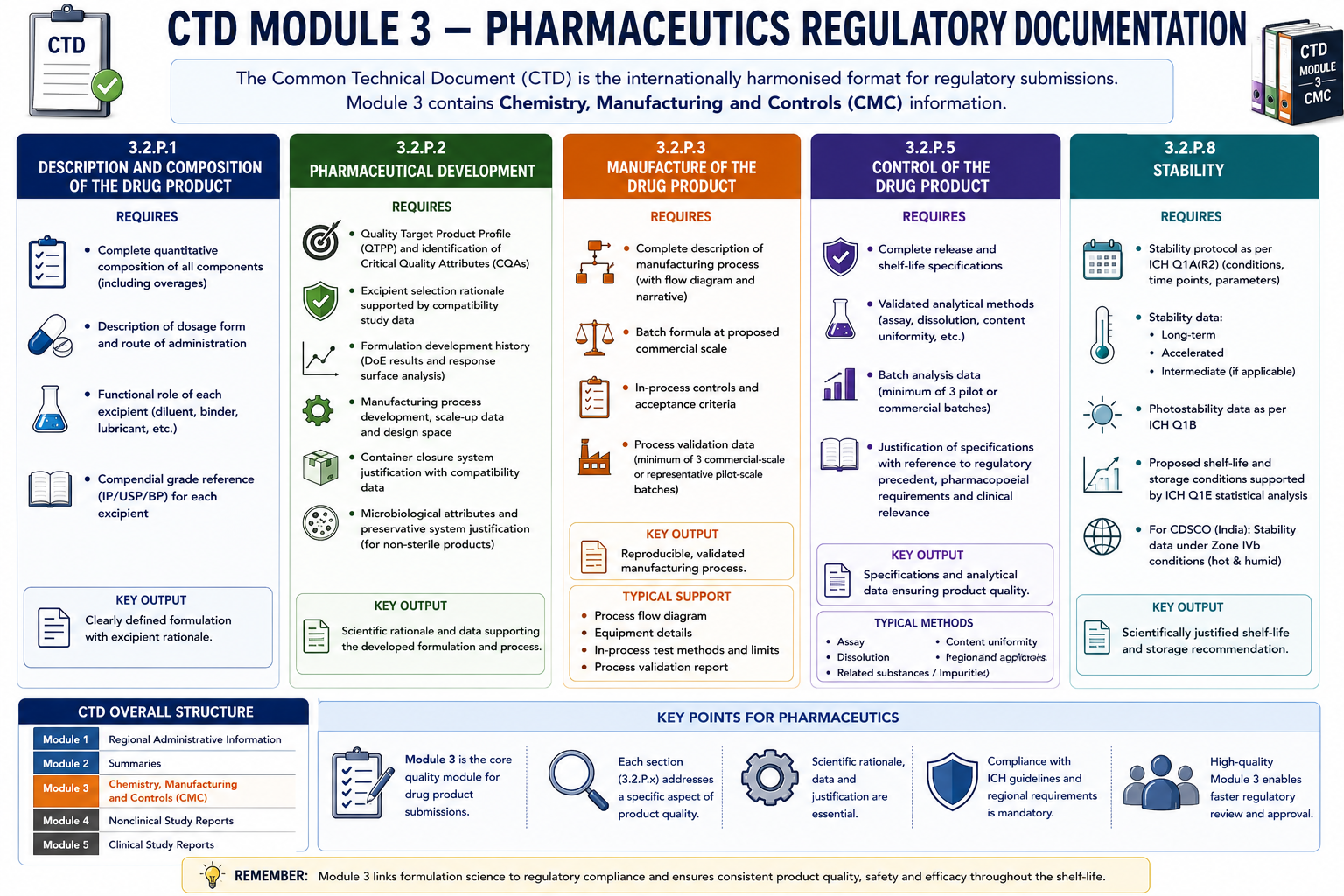
The Common Technical Document, universally abbreviated CTD, provides the internationally harmonised format within which pharmaceutical development, manufacturing, and quality data are compiled for regulatory submission across the jurisdictions that participate in ICH harmonisation. Module 3 of the CTD is dedicated specifically to Chemistry, Manufacturing, and Controls data, and within it, several sections carry particular significance for the pharmaceutics discipline.
Section 3.2.P.1 requires a complete quantitative statement of every formulation component, including any manufacturing overages, together with a description of the dosage form and route of administration, a statement of the functional role of each excipient — whether diluent, binder, lubricant, or otherwise — and reference to the compendial grade, whether Indian Pharmacopoeia, United States Pharmacopeia, or British Pharmacopoeia, applicable to each excipient employed.
Section 3.2.P.2 is in many respects the section of Module 3 most directly reflective of the science described throughout this text, requiring documentation of the Quality Target Product Profile and the identification and risk assessment of Critical Quality Attributes, the scientific rationale underlying excipient selection supported by compatibility study data, a narrative account of the formulation development history including Design of Experiments results and associated response surface analyses, a description of manufacturing process development including scale-up data and the established design space, justification of the chosen container closure system supported by compatibility data, and a statement of the product's microbiological attributes, including justification of any preservative system employed for non-sterile products.
Section 3.2.P.3 requires a complete description of the manufacturing process, conventionally supported by a flow diagram alongside detailed narrative text, the batch formula at the proposed commercial manufacturing scale, a statement of in-process controls and their associated acceptance criteria, and process validation data, generally derived from a minimum of three commercial-scale or representative pilot-scale batches.
Section 3.2.P.5 requires the complete release and shelf-life specification for the finished product, documentation of validated analytical methods including assay, dissolution, and content uniformity testing, batch analysis data from a minimum of three pilot or commercial batches, and a scientific justification of the proposed specifications with reference to regulatory precedent, pharmacopoeial requirements, and clinical relevance.
Section 3.2.P.8 addresses stability, directly incorporating the science described in the preceding chapter of this text: it requires the complete stability protocol conducted in accordance with ICH Q1A(R2), including all storage conditions, time points, and parameters monitored, the resulting long-term, accelerated, and, where applicable, intermediate stability data, photostability data generated in accordance with ICH Q1B, and the proposed shelf-life and storage condition statement, supported by the statistical analysis prescribed under ICH Q1E. For submissions to the Central Drugs Standard Control Organisation in India, this section additionally requires stability data generated under India-specific Zone IVb conditions, reflecting the country's designation as falling within the hottest and most humid of the internationally recognised climatic zones.
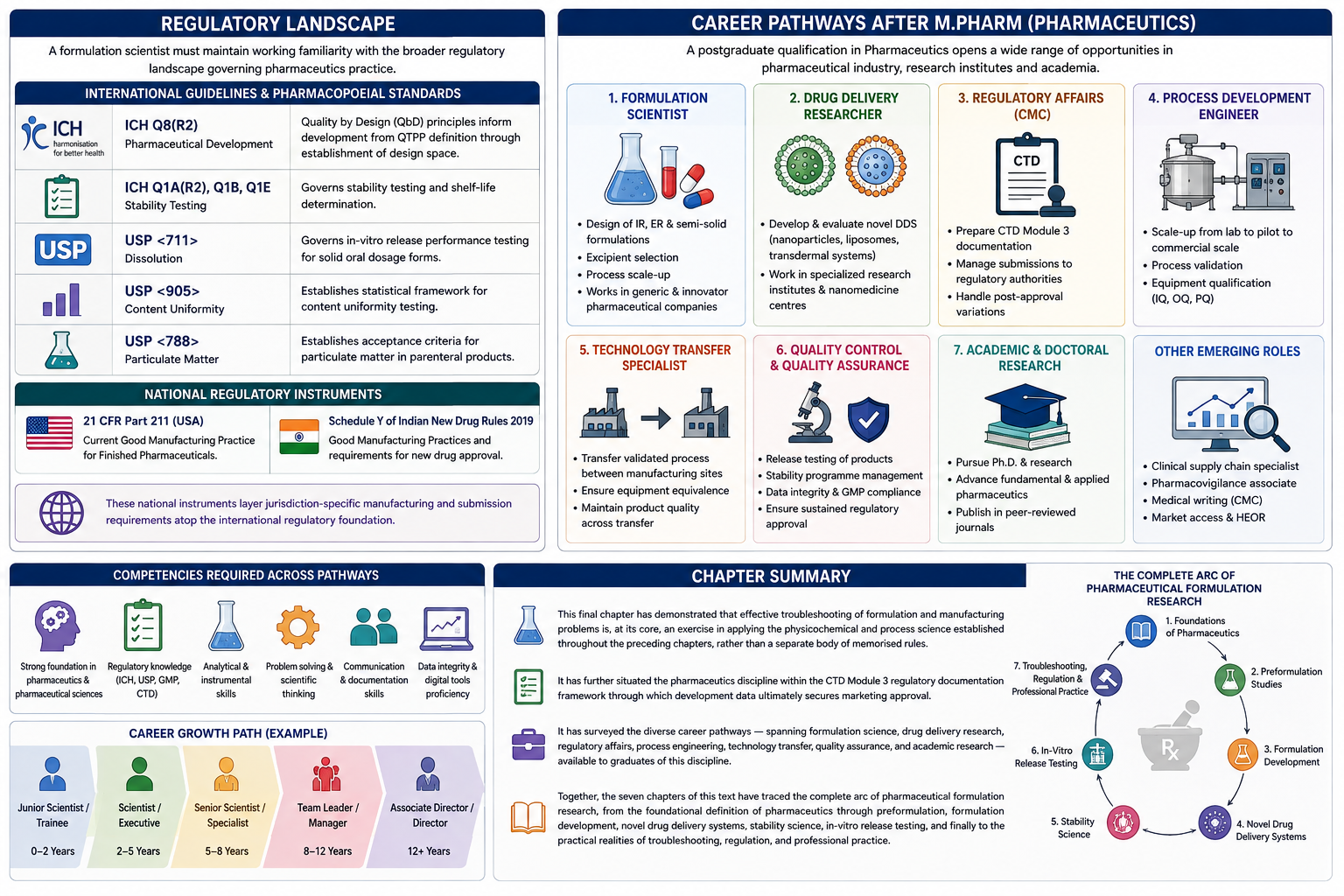
Beyond the CTD framework itself, a formulation scientist must maintain working familiarity with the broader regulatory landscape governing pharmaceutics practice. ICH Q8(R2) and its Quality by Design principles inform the entirety of pharmaceutical development activity, from initial QTPP definition through the establishment of an approved design space. ICH Q1A(R2), Q1B, and Q1E collectively govern stability testing and shelf-life determination, as detailed in the previous chapter. USP <711> and its associated dissolution acceptance criteria govern in-vitro release performance testing for solid oral dosage forms, while USP <905> establishes the statistical framework for content uniformity testing, and USP <788> establishes acceptance criteria for particulate matter in parenteral products. National instruments including 21 CFR Part 211 in the United States and Schedule Y of the Indian New Drug Rules 2019 layer jurisdiction-specific manufacturing and submission requirements atop this international foundation.
A postgraduate qualification in Pharmaceutics, most commonly the Master of Pharmacy degree with specialisation in this discipline, opens a broad range of career pathways within the global pharmaceutical industry and academic research community.
Formulation Scientist positions, prevalent across major generic and innovator pharmaceutical manufacturers, involve the design of immediate-release, extended-release, and semi-solid formulations, excipient selection, and process scale-up, drawing directly on the formulation development competencies addressed throughout this text.
Drug Delivery Researcher roles, commonly situated within specialised research institutes and dedicated nanomedicine research centres, focus on the design and evaluation of novel drug delivery systems such as nanoparticles, liposomes, and transdermal carriers, extending the science addressed in the chapter on novel drug delivery systems into active, frontier research.
Regulatory Affairs positions, specifically within the Chemistry, Manufacturing, and Controls function, involve the preparation of CTD Module 3 documentation and management of submissions to national and regional regulatory authorities, together with the assessment and filing of post-approval variations, drawing directly upon the regulatory documentation competencies addressed in this chapter.
Process Development Engineer roles focus on the scale-up of manufacturing processes from laboratory through pilot to full commercial scale, together with the formal process validation and equipment qualification activities, commonly organised around the Installation, Operational, and Performance Qualification framework, required to demonstrate manufacturing robustness prior to commercial launch.
Technology Transfer Specialist positions manage the complex process of transferring a validated manufacturing process between manufacturing sites, whether within a single organisation or between contract manufacturing partners, requiring careful demonstration of equipment equivalence and comprehensive documentation to preserve product quality across the transfer.
Quality Control and Quality Assurance roles, present within essentially every pharmaceutical manufacturing organisation, encompass release testing, ongoing stability programme management, and the data integrity and Good Manufacturing Practice compliance activities essential to sustained regulatory approval.
Academic and doctoral research pathways, pursued at specialised research institutions and university pharmacy departments, allow graduates to pursue fundamental and applied pharmaceutics research, contributing to the peer-reviewed scientific literature that continues to advance the discipline described throughout this text.