
Medicinal Plants: Concept and Classification
A medicinal plant is any plant species in which one or more organs contain substances that can be used for therapeutic purposes, or which serve as precursors for the synthesis of useful drugs. Medicinal plants are conventionally classified along several complementary axes: by the traditional system of medicine within which they are used (Ayurvedic, Unani, Siddha, homoeopathic, or ethnobotanical/folk), by the pharmacological action of their principal constituents (for example adaptogenic, hepatoprotective, or antimicrobial plants), by their chemical constituent class (alkaloidal, glucosidal, tannin-rich, or mucilaginous drugs), and by their cultivation status (wild-crafted versus cultivated). This multi-axis classification is not merely academic: it directly determines the collection strategy, the expected phytochemical profile, and the standardisation approach that will be appropriate for a given species, themes that recur throughout every subsequent phase of this text.
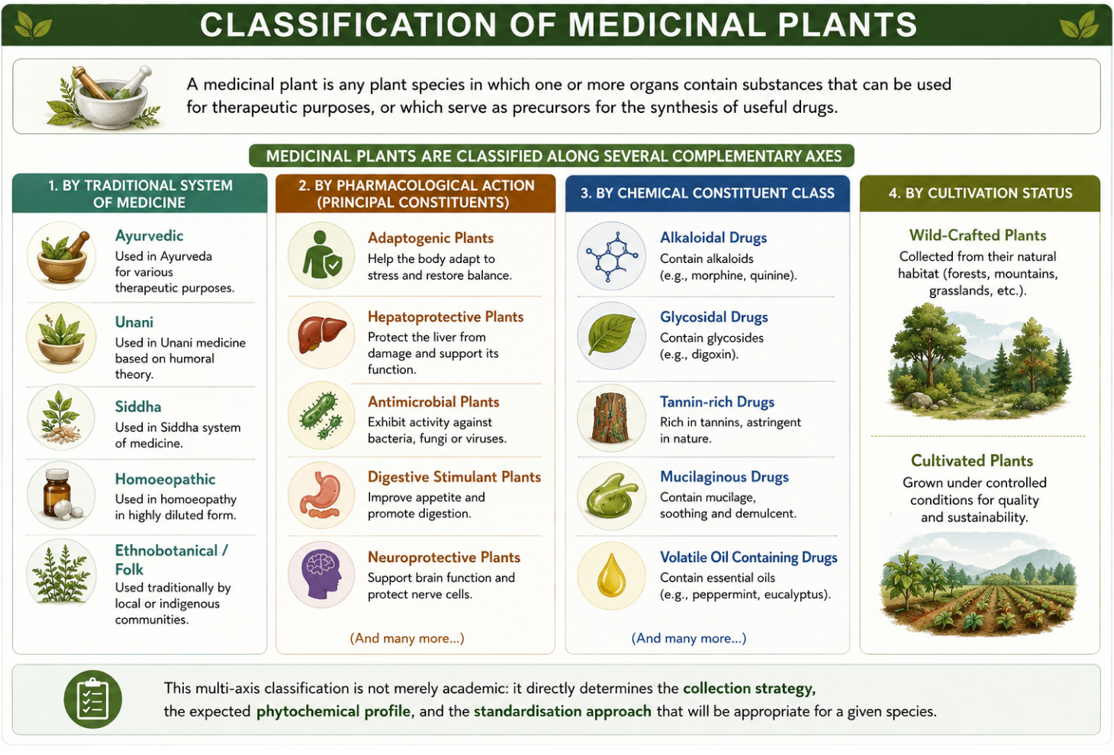
Medicinal plants are grouped according to the medical system in which they are traditionally used.
A. Ayurvedic Medicinal Plants
- Used in the Ayurveda system of medicine.
- Based on balancing the three doshas (Vata, Pitta, Kapha).
- Focuses on holistic healing and disease prevention.
- Examples: Ashwagandha, Tulsi, Neem, Turmeric.
B. Unani Medicinal Plants
- Used in the Unani system of medicine.
- Based on the theory of four humors (blood, phlegm, yellow bile, black bile).
- Aims to restore the body's natural balance.
- Examples: Senna, Liquorice, Black cumin.
C. Siddha Medicinal Plants
- Used in the Siddha system of medicine.
- Originated in South India.
- Emphasizes mineral and herbal formulations for disease management.
- Examples: Amla, Aloe vera, Adhatoda.
D. Homeopathic Medicinal Plants
- Used in Homeopathy.
- Prepared in highly diluted forms according to the principle of “Like cures like.”
- Examples: Arnica, Belladonna, Nux vomica.
E. Ethnobotanical / Folk Medicinal Plants
- Used traditionally by tribal and indigenous communities.
- Knowledge is passed from generation to generation.
- Often serves as the basis for modern drug discovery.
- Examples: Guduchi, Neem, Bael.
Medicinal plants can be classified according to their therapeutic or biological effects.
A. Adaptogenic Plants
- Help the body adapt to physical and mental stress.
- Improve stamina and resistance to fatigue.
- Enhance immunity.
- Examples: Ashwagandha, Ginseng, Rhodiola.
B. Hepatoprotective Plants
- Protect the liver from toxins and damage.
- Promote liver regeneration and normal liver function.
- Examples: Milk thistle, Kalmegh, Bhumyamalaki.
C. Antimicrobial Plants
- Inhibit or destroy bacteria, fungi, viruses, and parasites.
- Used to treat infectious diseases.
- Examples: Neem, Garlic, Tulsi.
D. Digestive Stimulant Plants
- Improve appetite and digestion.
- Stimulate secretion of digestive enzymes.
- Reduce indigestion and bloating.
- Examples: Ginger, Fennel, Peppermint.
E. Neuroprotective Plants
- Support brain function and memory.
- Protect nerve cells from damage.
- May help prevent neurodegenerative disorders.
- Examples: Brahmi, Ginkgo biloba, Shankhpushpi.
Medicinal plants are also classified according to the major phytochemicals they contain.
A. Alkaloidal Drugs
- Contain alkaloids (nitrogen-containing compounds).
- Usually have strong pharmacological activity.
- Examples: Morphine, Quinine, Atropine.
B. Glycosidal Drugs
- Contain glycosides.
- Widely used in cardiovascular and other therapeutic conditions.
- Examples: Digoxin, Sennosides.
C. Tannin-Rich Drugs
- Rich in tannins.
- Possess astringent, antioxidant, and antimicrobial properties.
- Examples: Catechu, Tea leaves, Witch hazel.
D. Mucilaginous Drugs
- Contain mucilage (water-soluble polysaccharides).
- Produce a soothing and protective effect on mucous membranes.
- Examples: Isabgol (Psyllium), Aloe vera, Marshmallow.
E. Volatile Oil-Containing Drugs
- Rich in essential (volatile) oils.
- Used for flavoring, aromatherapy, antimicrobial, and digestive purposes.
- Examples: Peppermint, Eucalyptus, Clove, Cinnamon.
Medicinal plants are classified based on how they are obtained.
A. Wild-Crafted Plants
- Collected directly from natural habitats such as forests, mountains, and grasslands.
- May show variation in quality due to environmental conditions.
- Sustainable harvesting is important to prevent depletion.
- Examples: Artemisia, Wild Ginseng, Himalayan herbs.
B. Cultivated Plants
- Grown under controlled agricultural conditions.
- Better quality control and consistent phytochemical content.
- Supports sustainable production and large-scale commercial use.
- Examples: Aloe vera, Ashwagandha, Senna, Tulsi.
Importance of Classification of Medicinal Plants
- Facilitates proper identification of medicinal plants.
- Helps in selecting plants for specific therapeutic purposes.
- Supports standardization and quality control of herbal medicines.
- Assists in phytochemical and pharmacological research.
- Ensures sustainable cultivation and conservation of medicinal plants.
- Aids in regulatory approval and commercialization of herbal products.
- Improves consistency, safety, and efficacy of herbal formulations.
Key Points
- Medicinal plants are classified using multiple complementary systems.
- Traditional classification groups plants according to systems such as Ayurveda, Unani, Siddha, Homeopathy, and Folk medicine.
- Pharmacological classification is based on therapeutic actions like adaptogenic, hepatoprotective, antimicrobial, digestive stimulant, and neuroprotective effects.
- Chemical classification depends on the major phytoconstituents such as alkaloids, glycosides, tannins, mucilage, and volatile oils.
- Cultivation-based classification distinguishes between wild-crafted and cultivated medicinal plants.
- Proper classification helps determine the collection strategy, phytochemical profile, standardization methods, quality control, and therapeutic application of medicinal plants.