
Gas Chromatography (GC) and GC-MS
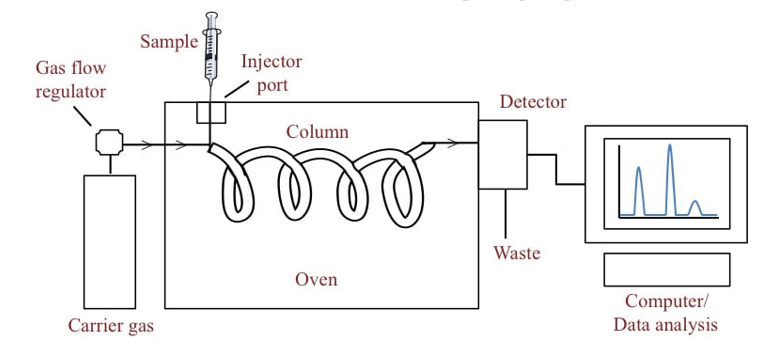
Gas chromatography is a separation technique applicable to volatile and thermally stable compounds, in which components are separated according to differences in their boiling point and their relative affinity for a liquid stationary phase coated on the inner wall of a capillary column. An inert carrier gas, typically helium or nitrogen, transports the vaporised sample through the column, which is housed within an oven capable of precise and programmable temperature control, allowing separation of compounds across a wide range of volatilities within a single analytical run.
Detection in gas chromatography may be accomplished using a flame ionisation detector, which responds to essentially all organic compounds and is widely used for the determination of residual solvents, or a nitrogen-phosphorus detector for selective detection of nitrogen- or phosphorus-containing analytes. Coupling gas chromatography with mass spectrometry, referred to as GC-MS, adds a further dimension of structural identification by fragmenting the eluting analyte and recording its characteristic mass spectrum, which can be matched against reference spectral libraries for unambiguous confirmation of identity. Within pharmaceutical quality assurance, gas chromatography is indispensable for the determination of residual solvents in accordance with International Council for Harmonisation guideline Q3C, for assay of volatile active substances, and for the identification of volatile impurities and degradation products.
Development of a gas chromatographic method requires careful attention to sample preparation, since analytes may require derivatisation to improve volatility or thermal stability, or may be amenable to headspace sampling for volatile components in complex matrices. Column selection is guided by the polarity of the analytes of interest, and the temperature program is then optimised, balancing an initial isothermal hold with a controlled temperature ramp to achieve adequate resolution within a practical analysis time. Detector selection follows from the intended application, and qualitative identification is achieved by comparison of retention indices and, where mass spectrometric detection is employed, by matching acquired spectra against recognised spectral libraries.
Objective
To develop a robust, accurate, and reproducible Gas Chromatography (GC) method by systematically optimizing sample preparation, column selection, temperature programming, detector selection, analyte identification, and method validation for qualitative and quantitative analysis.
Purpose
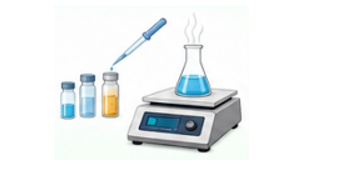
Sample preparation is the first and most critical step in GC method development. It ensures that the analyte is suitable for gas chromatographic analysis by improving volatility, stability, and cleanliness of the sample.
Principle
Samples should be prepared to remove interfering substances and, if necessary, converted into more volatile derivatives to improve chromatographic performance.
Sample Preparation Techniques
- Direct sample dilution
- Liquid–Liquid Extraction (LLE)
- Solid Phase Extraction (SPE)
- Headspace Sampling (for volatile compounds)
- Derivatization (to improve volatility and thermal stability)
Importance
- Removes impurities and matrix interference.
- Improves peak shape.
- Enhances sensitivity.
- Protects the chromatographic column.
- Produces reproducible analytical results.
Purpose
To select a chromatographic column capable of providing efficient separation of analytes based on their chemical properties.
Principle
Column selection depends primarily on analyte polarity, molecular weight, volatility, and the intended analytical application.

Common Column Types
Non-Polar Columns
Examples:
- DB-5
- HP-5
- 5% Phenyl–95% Dimethylpolysiloxane
Medium Polarity Columns
Examples:
- DB-1701
- 14% Cyanopropyl Phenyl
Polar Columns
Examples:
- DB-WAX
- Polyethylene Glycol (PEG)
Selection Criteria
- Nature of analyte
- Required separation efficiency
- Analysis time
- Temperature stability
Importance
- Improves chromatographic resolution.
- Reduces co-elution.
- Enhances selectivity.
- Produces symmetrical peaks.
Purpose
To optimize oven temperature conditions for efficient separation within an acceptable analysis time.
Principle
GC separates compounds based on their boiling points and interaction with the stationary phase. Temperature programming controls analyte elution and peak resolution.
Typical Temperature Program
- Initial oven temperature
- Initial hold time
- Controlled temperature ramp
- Final oven temperature
- Final hold time
Optimization Considerations
- Improve peak separation.
- Reduce analysis time.
- Prevent peak broadening.
- Ensure complete analyte elution.
Importance
- Produces better chromatographic resolution.
- Improves peak symmetry.
- Reduces total run time.
- Enhances method efficiency.
Purpose
To select a detector that provides maximum sensitivity and selectivity for the analyte.
Principle
Different GC detectors respond to different classes of compounds based on their physical or chemical properties.
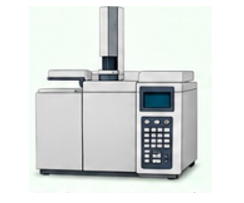
Common GC Detectors
Flame Ionization Detector (FID)
- Suitable for organic compounds.
- Excellent quantitative performance.
Thermal Conductivity Detector (TCD)
- Universal detector.
- Suitable for permanent gases.
Electron Capture Detector (ECD)
- Highly sensitive for halogenated compounds.
- Used for pesticide analysis.
Mass Spectrometry Detector (GC-MS)
- Provides structural identification.
- High sensitivity and specificity.
Importance
- Accurate detection.
- High sensitivity.
- Improved selectivity.
- Reliable quantitative analysis.
Purpose
To accurately identify chromatographic peaks corresponding to analytes.
Principle
Identification is based on chromatographic retention characteristics and spectral information.
Identification Methods
- Retention Time Comparison
- Retention Index Comparison
- Mass Spectral Library Matching (GC-MS)
Importance
- Confirms analyte identity.
- Distinguishes analytes from impurities.
- Improves analytical reliability.
- Supports qualitative analysis.
Purpose
To demonstrate that the developed GC method is reliable, accurate, and suitable for routine pharmaceutical analysis.
Validation Parameters
Specificity
Ability to distinguish analytes from impurities and excipients.
Accuracy
Recovery studies should typically fall within 98–102%.
Precision
- Repeatability (%RSD ≤ 2%)
- Intermediate Precision (%RSD ≤ 2%)
Linearity
Demonstrates proportionality between analyte concentration and detector response.
Limit of Detection (LOD)
Lowest detectable concentration.
Limit of Quantification (LOQ)
Lowest concentration quantified accurately and precisely.
Robustness
Evaluates the influence of small deliberate changes in analytical conditions.
Importance
- Ensures regulatory compliance.
- Confirms method suitability.
- Supports routine quality control testing.
Gas Chromatography System Components
A typical Gas Chromatography instrument consists of the following components:
- Injector/Autosampler – Introduces the sample into the system.
- Chromatographic Column – Separates analytes based on volatility and interaction with the stationary phase.
- Temperature-Controlled Oven – Maintains and programs the column temperature for optimal separation.
- Detector – Detects eluted analytes and converts them into electrical signals.
- Data Acquisition System – Records chromatograms and performs data analysis.
Gas chromatographic determination of residual solvents must be conducted in accordance with International Council for Harmonisation Q3C, which classifies solvents according to their toxicological risk and establishes permitted daily exposure limits that the analytical method must be capable of reliably detecting and quantifying.