
Formulation Development
Formulation development is the stage at which the physicochemical dataset generated during preformulation is translated into an actual, manufacturable, stable, and effective dosage form. It encompasses the rational selection of excipients, the design and optimisation of a manufacturing process, and the systematic characterisation of the resulting product against a predefined set of Critical Quality Attributes. This chapter addresses formulation development across the major dosage form categories — solid, liquid, semi-solid, and parenteral — and introduces the Quality by Design paradigm that governs modern, risk-based formulation practice.
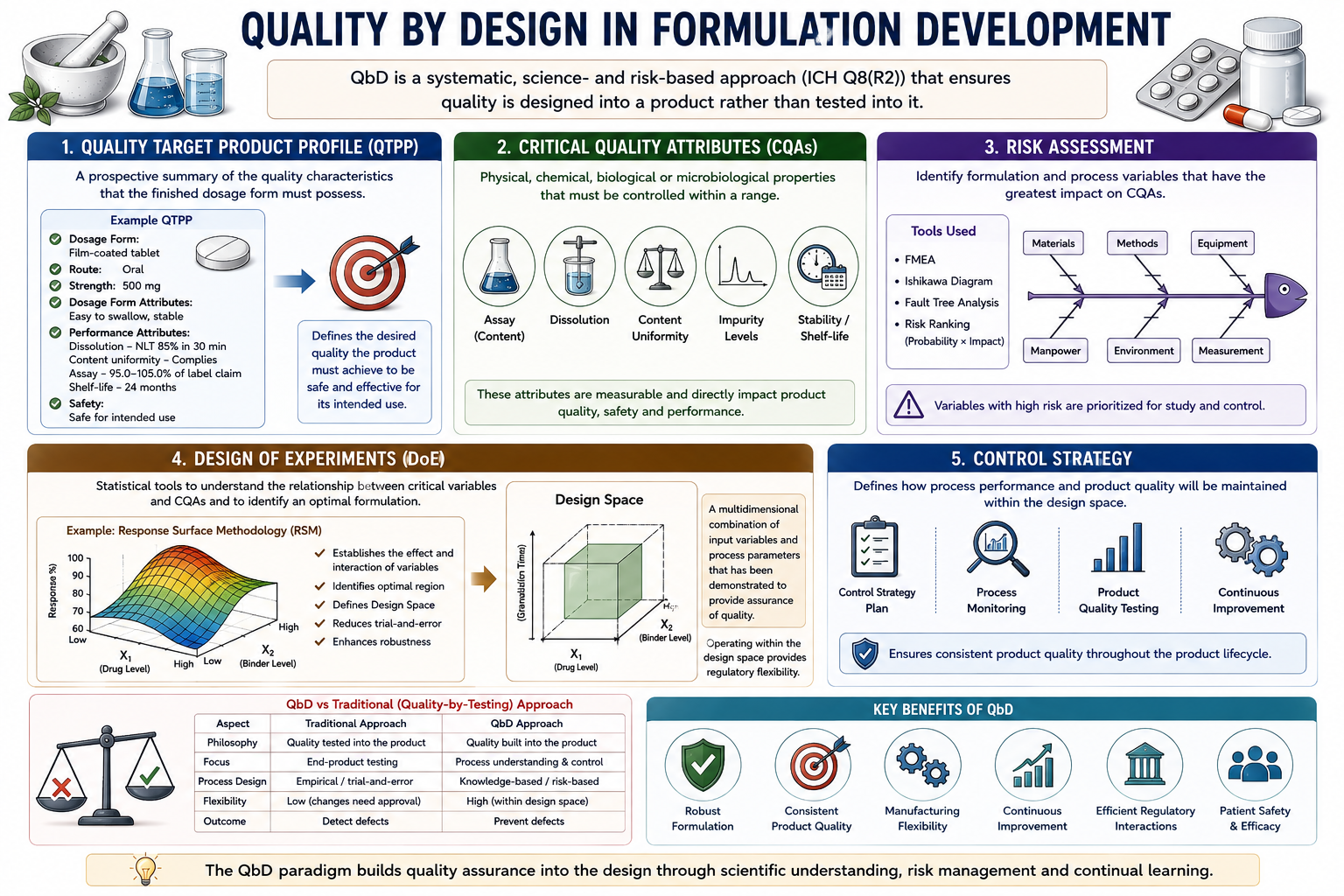
Quality by Design, commonly abbreviated QbD, is a systematic, science- and risk-based approach to pharmaceutical development, formalised internationally through ICH Q8(R2), which holds that quality should be designed into a product from its inception rather than tested into it after manufacture. The QbD process begins with definition of the Quality Target Product Profile, or QTPP, a prospective summary of the quality characteristics that the finished dosage form must possess to be safe and effective for its intended use — for example, a film-coated tablet intended for oral administration with a specified dissolution performance, content uniformity, and shelf-life.
From the QTPP, the formulation scientist identifies the Critical Quality Attributes, the physical, chemical, biological, or microbiological properties that must be controlled within an appropriate range to ensure the desired product quality is achieved — commonly including assay, dissolution, content uniformity, and impurity levels. Risk assessment tools are then applied to identify which formulation and process variables, termed Critical Process Parameters and Critical Material Attributes, exert the greatest influence on these Critical Quality Attributes, focusing subsequent experimental effort where it will yield the greatest benefit.
Design of Experiments, or DoE, provides the statistical methodology through which the relationship between these critical variables and the resulting quality attributes is systematically mapped, typically using response surface methodology to identify an optimal formulation and to define a design space — a multidimensional combination of input variables and process parameters that has been demonstrated to provide assurance of quality. Operating within an approved design space affords manufacturers meaningful regulatory flexibility, since movements within the space do not constitute a formal post-approval change requiring additional regulatory review.
The QbD paradigm represents a fundamental philosophical shift from the traditional quality-by-testing model, in which a fixed process was validated and quality was subsequently confirmed by end-product testing, toward a model in which deep mechanistic understanding of the formulation and process is used to build quality assurance directly into the design itself. This shift has profound implications not only for formulation robustness but also for manufacturing flexibility, continuous improvement, and the efficiency of regulatory interactions, and its principles recur throughout the remainder of this chapter as each dosage form category is addressed in turn.
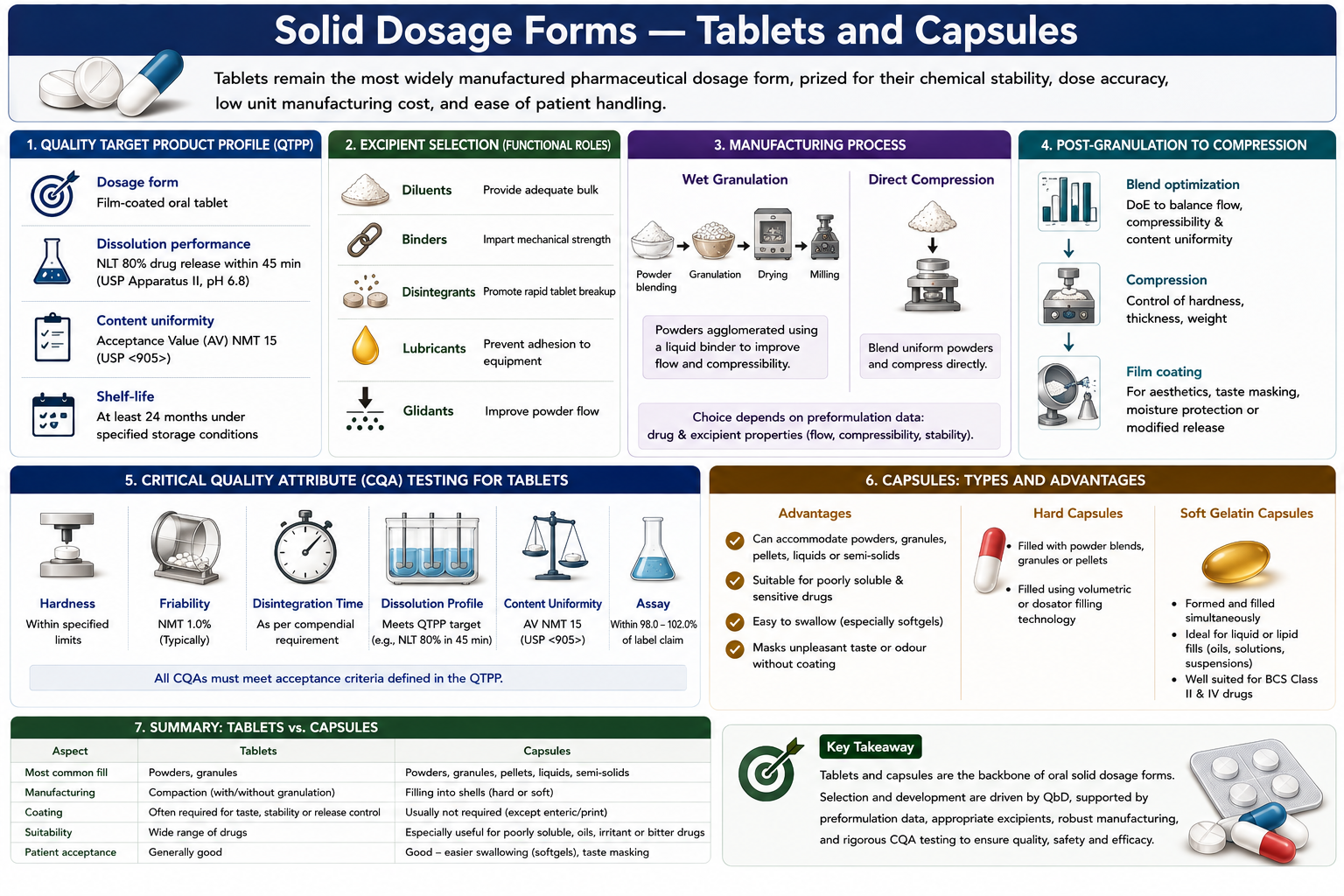
Tablets remain the most widely manufactured pharmaceutical dosage form, prized for their chemical stability, dose accuracy, low unit manufacturing cost, and ease of patient handling. Tablet development begins, in accordance with QbD principles, with definition of the Quality Target Product Profile, typically specifying the dosage form as a film-coated oral tablet, the required dissolution performance — commonly not less than eighty per cent drug release within forty-five minutes under USP Apparatus II conditions at pH 6.8 — the content uniformity requirement expressed as an Acceptance Value of no more than fifteen under USP <905>, and a target shelf-life of at least twenty-four months under the relevant climatic storage conditions.
Excipient selection follows, guided by both the preformulation compatibility data and the functional role each excipient must fulfil: diluents to provide adequate bulk, binders to impart mechanical strength, disintegrants to promote rapid tablet breakup, lubricants to prevent adhesion to manufacturing equipment, and glidants to improve powder flow. The manufacturing process itself is typically achieved through either wet granulation, in which powders are agglomerated using a liquid binder to improve flow and compressibility, or direct compression, a simpler process suitable for drugs and excipients with inherently favourable flow and compaction properties; the choice between these routes is dictated largely by the physical characteristics established during preformulation.
Following granulation, the resulting blend is optimised, commonly through Design of Experiments, to balance flow, compressibility, and content uniformity, before proceeding to compression, where tablet hardness, thickness, and weight are controlled within tightly specified ranges. Many tablets subsequently undergo film coating, which may serve aesthetic, taste-masking, or functional purposes such as moisture protection or modified-release performance. The finished tablet is then subjected to comprehensive Critical Quality Attribute testing, encompassing hardness, friability, disintegration time, dissolution profile, content uniformity, and assay, each of which must satisfy the acceptance criteria established in the original Quality Target Product Profile.
Capsules, comprising a drug-containing fill enclosed within a hard or soft gelatin or hypromellose shell, offer certain advantages over tablets, including the ability to accommodate liquid or semi-solid fills for poorly soluble drugs, ease of swallowing for some patient populations, and the masking of unpleasant taste or odour without the need for a coating step. Hard capsules are typically filled with powder blends, granules, or pellets using volumetric or dosator filling technology, while soft gelatin capsules are formed and filled simultaneously, making them particularly well suited to the delivery of liquid lipid-based formulations such as those used for BCS Class II and IV drugs.
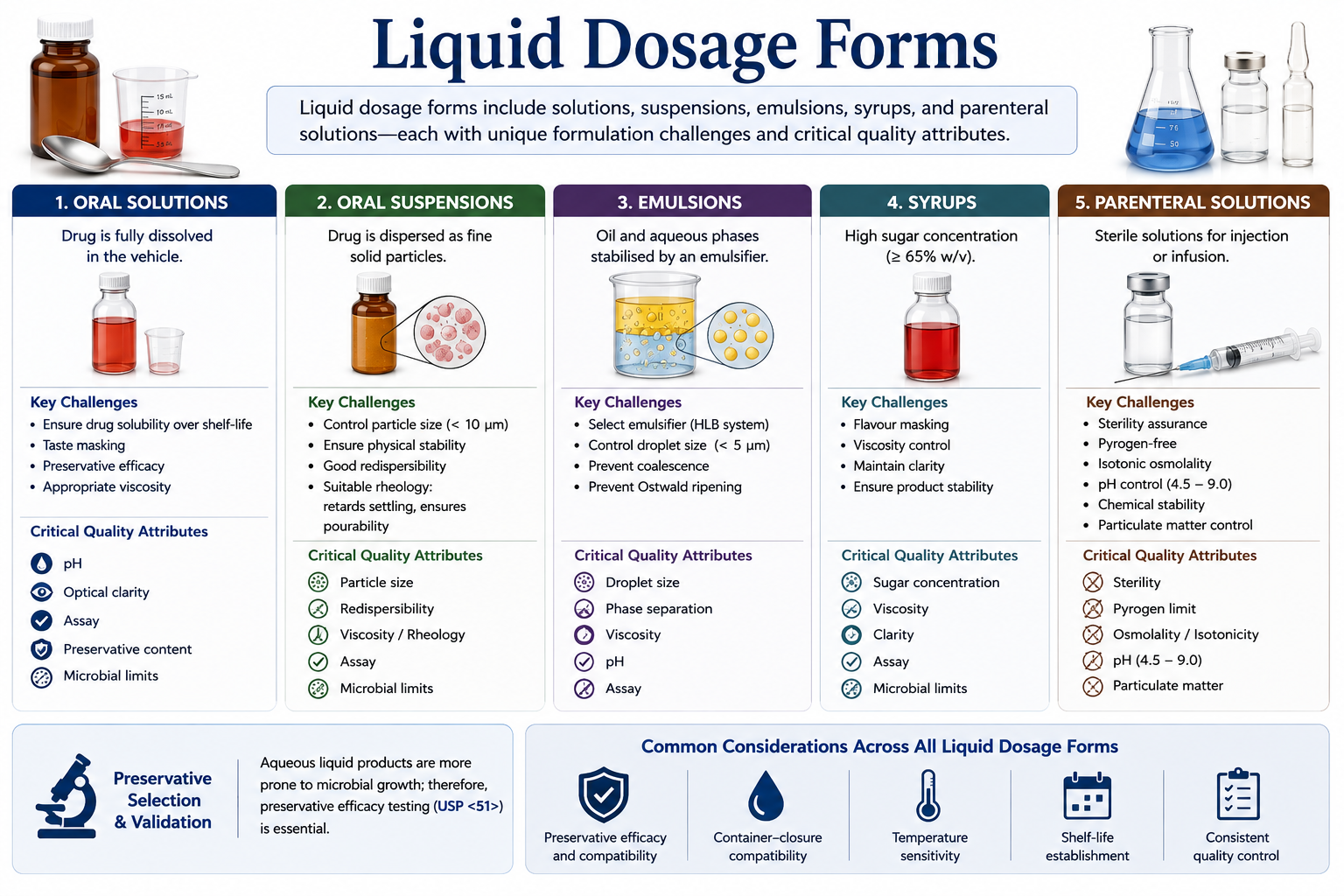
Liquid dosage forms encompass a range of pharmaceutical presentations — oral solutions, suspensions, emulsions, syrups, and parenteral solutions — each characterised by distinct formulation challenges arising from the physical state of the system. Oral solutions, in which the drug is fully dissolved, present challenges centred on ensuring adequate drug solubility across the product's shelf-life, effectively masking unpalatable taste, maintaining preservative efficacy against microbial contamination, and achieving an appropriate viscosity for accurate dosing and mouthfeel; critical quality attributes for these products include pH, optical clarity, assay, preservative content, and compliance with microbial limits.
Oral suspensions, containing drug dispersed as fine solid particles rather than dissolved, require careful control of particle size, generally below ten micrometres, to ensure both physical stability and consistent bioavailability, together with attention to redispersibility following sedimentation and to the rheological properties of the vehicle, which must be sufficiently viscous to retard settling without impeding pourability. Emulsions, comprising immiscible oil and aqueous phases stabilised by an emulsifying agent, demand careful selection of emulsifier and emulsifier blend according to the Hydrophile-Lipophile Balance system, together with rigorous control of droplet size, typically targeted below five micrometres, since droplet growth through coalescence or Ostwald ripening represents the principal physical instability risk for these systems.
Syrups, characterised by a high sugar concentration typically exceeding sixty-five per cent weight-by-volume, achieve a degree of self-preservation against microbial growth through the resulting high osmotic pressure, though formulation attention must still be paid to flavour masking, viscosity, and clarity. Parenteral solutions occupy a distinct category owing to the stringent requirements imposed by their route of administration, which bypasses the body's normal microbial and particulate defence barriers; these products must be sterile, essentially free of pyrogenic contamination, formulated within an isotonic osmolality range, and maintained within a pH range of approximately 4.5 to 9.0 to minimise both chemical degradation and injection-site irritation, considerations that are examined in greater depth in the discussion of parenteral formulations that follows.
Across all liquid dosage form categories, the formulation scientist must additionally give careful consideration to preservative selection and validation, since the aqueous environment characteristic of liquid products is inherently more supportive of microbial proliferation than the low-moisture environment of solid dosage forms, making preservative efficacy testing, generally conducted in accordance with USP <51>, an essential component of liquid formulation development.
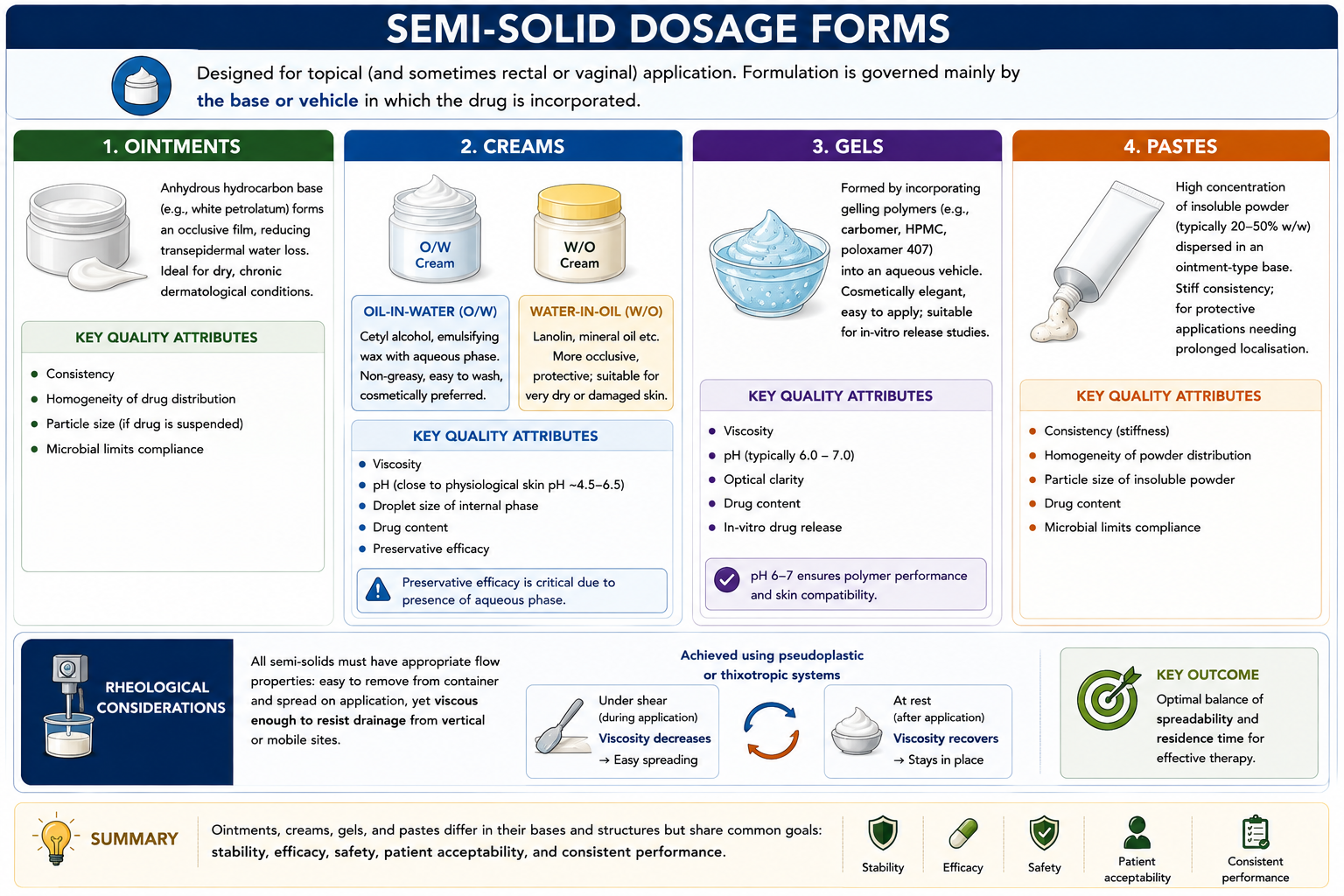
Semi-solid dosage forms — ointments, creams, gels, and pastes — are designed principally for topical, and occasionally rectal or vaginal, application, and their formulation is governed largely by the composition of the base or vehicle in which the drug is incorporated. Ointments are typically formulated using an anhydrous hydrocarbon base such as white petrolatum, producing an occlusive film that reduces transepidermal water loss and is well suited to the treatment of dry, chronic dermatological conditions; their key quality attributes include consistency, homogeneity of drug distribution, particle size where the drug is suspended rather than dissolved, and compliance with microbial limits.
Creams are emulsified semi-solid systems and may be formulated as either oil-in-water systems, commonly employing cetyl alcohol and an emulsifying wax alongside an aqueous continuous phase, which are generally cosmetically preferred for their non-greasy feel and ease of washing, or as water-in-oil systems incorporating components such as lanolin and mineral oil, which provide a more occlusive, protective film better suited to very dry or damaged skin. Critical quality attributes for creams include viscosity, pH — generally targeted close to the physiological skin surface value — droplet size of the internal phase, drug content, and preservative efficacy, the last being particularly important given the aqueous phase present in these formulations.
Gels, formed through the incorporation of a gelling polymer such as carbomer, hydroxypropyl methylcellulose, or poloxamer 407 into an aqueous vehicle, are valued for their cosmetic elegance, ease of application, and, in many cases, favourable drug release characteristics suitable for evaluation by in-vitro release testing; critical attributes include viscosity, pH, typically controlled within a range of six to seven to ensure both polymer performance and skin compatibility, optical clarity, and drug content. Pastes, distinguished by a high concentration of insoluble powder, typically twenty to fifty per cent, dispersed within an ointment-type base, possess a notably stiff consistency well suited to protective applications requiring prolonged localisation at the site of application.
Across all semi-solid categories, formulation development must give particular attention to rheological behaviour, since the product must exhibit appropriate flow properties for ease of removal from its container and spreading on application, while simultaneously remaining sufficiently viscous to resist drainage from vertical or mobile application sites; this is frequently achieved through the selection of pseudoplastic or thixotropic rheology modifiers that reduce apparent viscosity under the shear of application while recovering higher viscosity at rest.
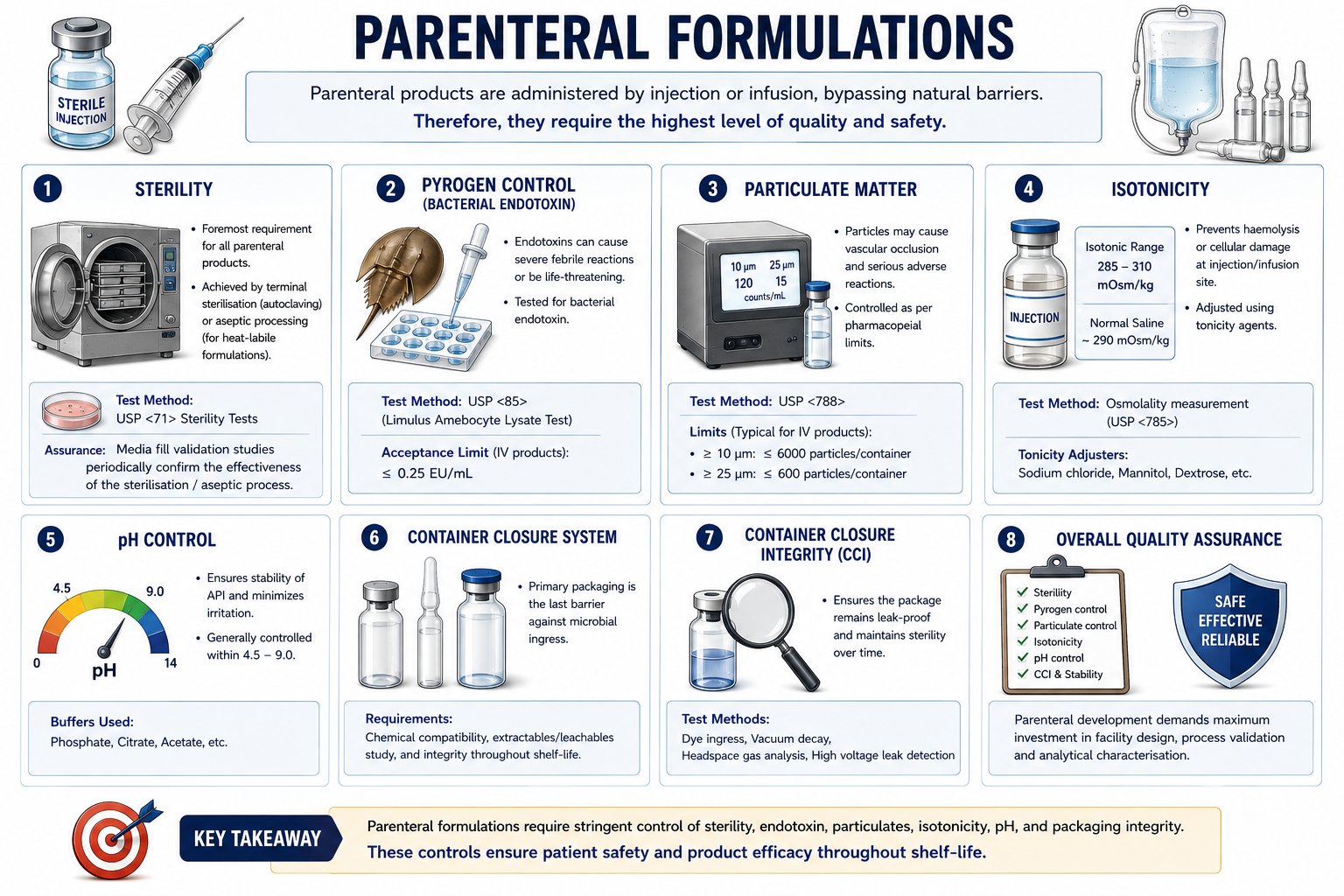
Parenteral formulations, administered by injection or infusion directly into body tissue or the systemic circulation, are subject to the most rigorous quality requirements in the entire pharmaceutical industry, a consequence of their bypassing the natural protective barriers of the skin and gastrointestinal tract. Sterility is the foremost requirement, verified in accordance with USP <71> and achieved through either terminal sterilisation, most commonly by autoclaving, or aseptic processing for heat-labile formulations, with the validity of the chosen approach confirmed periodically through media fill validation studies that simulate the manufacturing process using a microbiological growth medium in place of the actual product.
Freedom from pyrogenic contamination, principally bacterial endotoxin, is assessed using the Limulus Amoebocyte Lysate test described in USP <85>, with acceptance limits typically set at no more than 0.25 endotoxin units per millilitre for intravenous products, reflecting the severe febrile and potentially life-threatening reactions that endotoxin contamination can provoke when introduced directly into the bloodstream. Particulate matter, whether originating from manufacturing equipment, container closure components, or inadequately filtered raw materials, is controlled in accordance with USP <788>, which specifies maximum permitted particle counts at both the ten-micrometre and twenty-five-micrometre size thresholds, since particulate contamination introduced intravenously carries a risk of vascular occlusion.
Isotonicity, ensuring the osmolality of the formulation falls within the physiological range of approximately 285 to 310 milliosmoles per kilogram, is essential to prevent haemolysis or cellular damage at the injection or infusion site, and is achieved through the addition of tonicity-adjusting agents such as sodium chloride or mannitol as required. pH must similarly be controlled, generally within the range of 4.5 to 9.0, using appropriate buffer systems such as phosphate, citrate, or acetate, balancing chemical stability of the active ingredient against the irritation potential of formulations at pH extremes.
Finally, the container closure system employed for a parenteral product must undergo rigorous compatibility and integrity assessment, since the primary packaging represents the last line of defence against microbial ingress throughout the product's shelf-life; container closure integrity testing, employing methods such as dye ingress, vacuum decay, or headspace gas analysis, provides the evidentiary basis for demonstrating that the chosen packaging system maintains sterility over the intended storage period. Owing to the cumulative stringency of these requirements, parenteral product development typically demands substantially greater investment in facility design, process validation, and analytical characterisation than any other dosage form category.