
Chromatographic Techniques
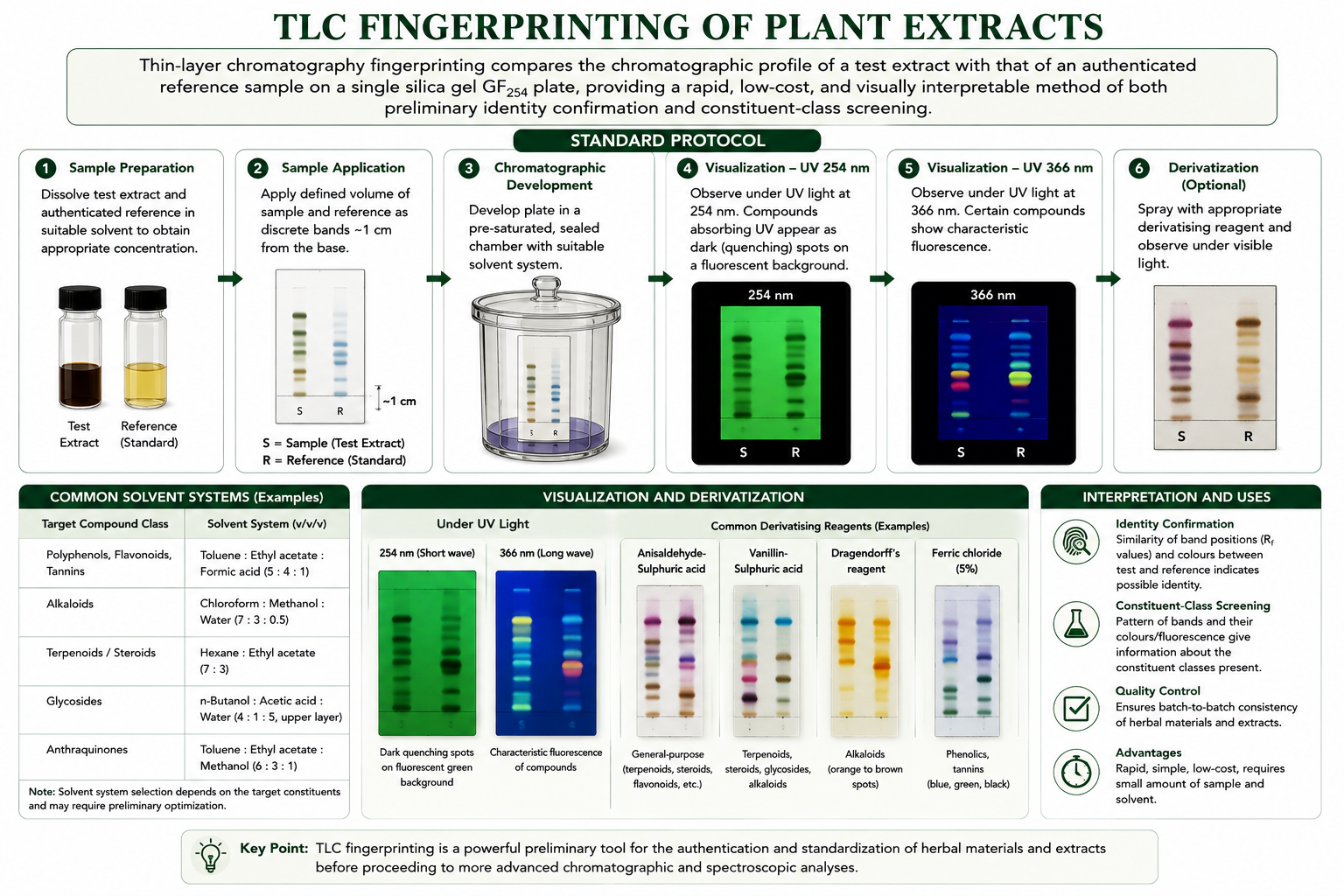
Thin-layer chromatography fingerprinting compares the chromatographic profile of a test extract with that of an authenticated reference sample on a single silica gel GF254 plate, providing a rapid, low-cost, and visually interpretable method of both preliminary identity confirmation and constituent-class screening. Standard protocol applies a defined volume of sample and reference solution as discrete bands approximately one centimetre from the plate base, develops the plate in a pre-saturated, sealed chamber over a defined solvent system chosen for the target compound class (for example toluene:ethyl acetate:formic acid for polyphenols, or chloroform:methanol:water for alkaloids), and visualises the developed plate under ultraviolet light at 254 nm (where compounds absorbing UV appear as dark quenching spots against a fluorescent background) and at 366 nm (where certain compounds show characteristic fluorescence), often supplemented by spraying with a class-specific derivatising reagent.
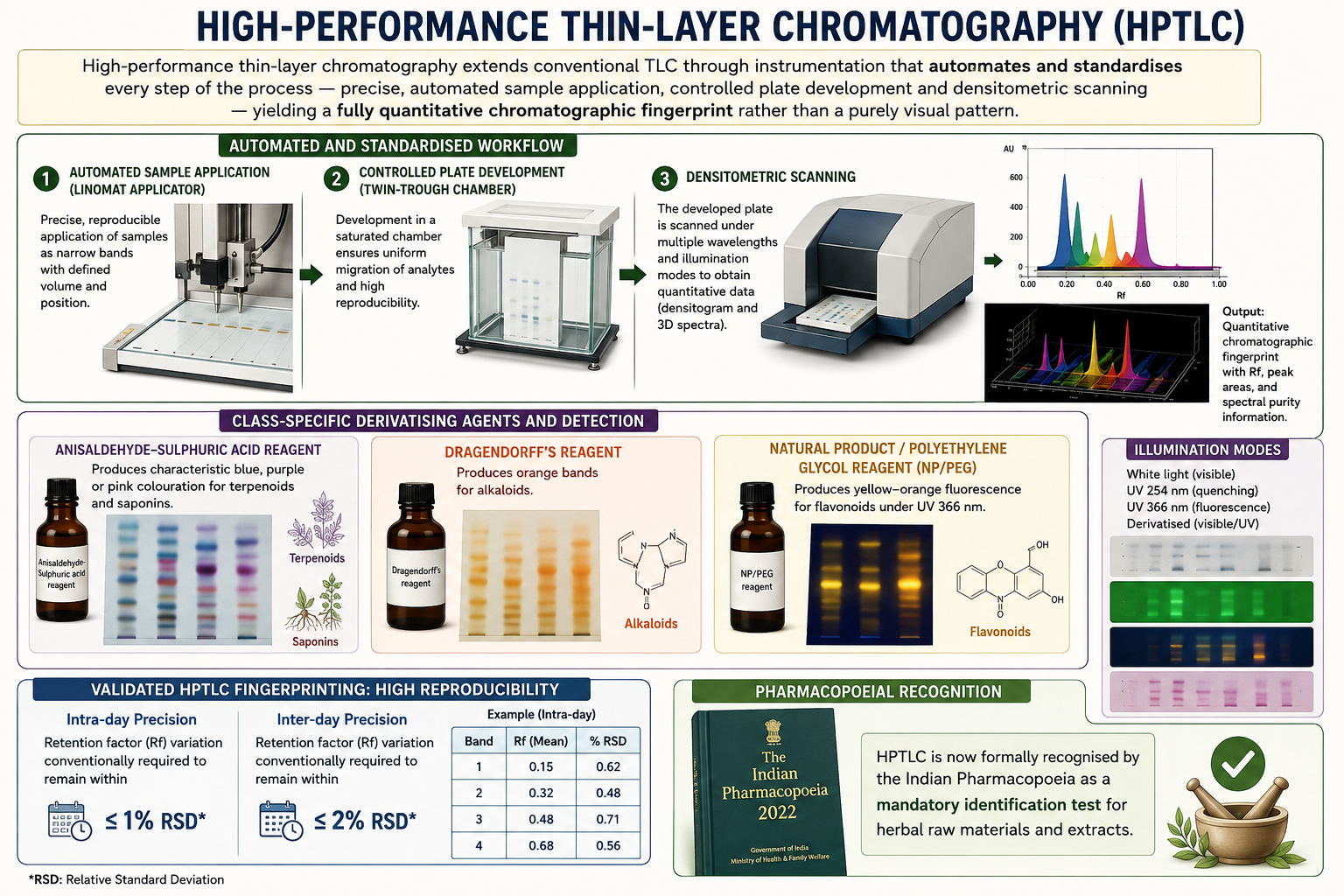
High-performance thin-layer chromatography extends conventional TLC through instrumentation that automates and standardises every step of the process — precise, automated sample application (commonly by a device such as the Linomat applicator), controlled plate development in a twin-trough chamber, and densitometric scanning of the developed plate under multiple wavelengths and illumination modes — yielding a fully quantitative chromatographic fingerprint rather than a purely visual pattern. Class-specific derivatising agents are again employed, including anisaldehyde-sulphuric acid (producing characteristic blue, purple, or pink colouration for terpenoids and saponins), Dragendorff's reagent (orange bands for alkaloids), and natural product/polyethylene glycol reagent (yellow-orange fluorescence for flavonoids under UV 366 nm). Validated HPTLC fingerprinting demands high reproducibility, with intra-day retention factor variation conventionally required to remain within one percent relative standard deviation and inter-day variation within two percent, and the technique is now formally recognised by the Indian Pharmacopoeia as a mandatory identification test for herbal raw materials and extracts.
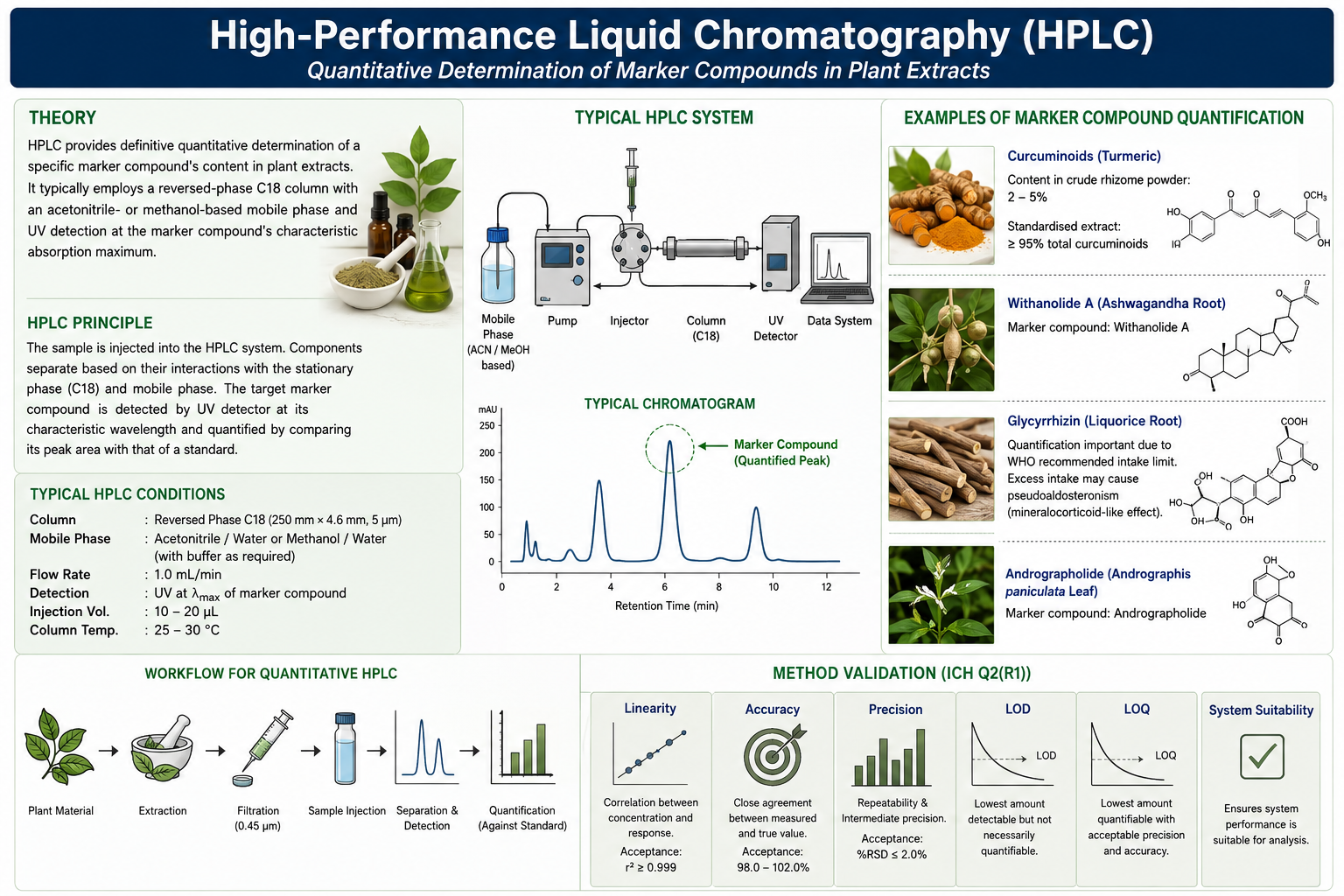
High-performance liquid chromatography provides definitive quantitative determination of a specific marker compound's content within a plant extract, typically employing a reversed-phase C18 column with an acetonitrile- or methanol-based mobile phase and ultraviolet detection at the marker compound's characteristic absorption maximum. Well-established examples include curcuminoid quantification in turmeric (typically 2–5% in the crude rhizome powder, standardised to at least 95% total curcuminoids in a concentrated extract), withanolide A quantification in Ashwagandha root, glycyrrhizin quantification in liquorice root — of particular importance given the WHO-recommended intake limit arising from glycyrrhizin's mineralocorticoid-like pseudoaldosteronism risk — and andrographolide quantification in Andrographis paniculata leaf. Every quantitative HPLC method applied to marker compound determination must be formally validated according to ICH Q2(R1) guidelines, addressing linearity, accuracy, precision, and the limits of detection and quantification, as elaborated further in Phase 5.